Mobile charge capture is built for bedside hospital rounding, while EHR-native tools are built for office-based workflows. HybridChart EVOLVE extends an EHR into the hospital rather than replacing it, capturing charges in 3 seconds at the bedside.
- EHRs are designed around the office visit, not the hospital rounding workflow.
- HybridChart EVOLVE captures charges in 3 seconds at the bedside, purpose-built for hospital rounding.
- HybridChart connects to leading EHRs rather than competing with them.
- Customers using HybridChart report 10 to 15 percent revenue gains after adoption.
Why aren’t EHR-native tools enough for hospital rounding?
EHRs are built to support the office visit: scheduling, documentation, and billing tied to a single practice location. Hospital rounding is a different workflow, with physicians moving across units and facilities throughout the day, often outside their home EHR.
HybridChart EVOLVE is purpose-built for that rounding workflow, with Census Management that tracks patients across every facility a physician rounds in, and bedside charge capture in 3 seconds.
Can an EHR alone handle mobile hospital rounding?
EHRs are built for office-based workflows. Hospital rounding across multiple facilities is a distinct workflow that HybridChart EVOLVE is purpose-built to support.
How does HybridChart complement an EHR instead of replacing it?
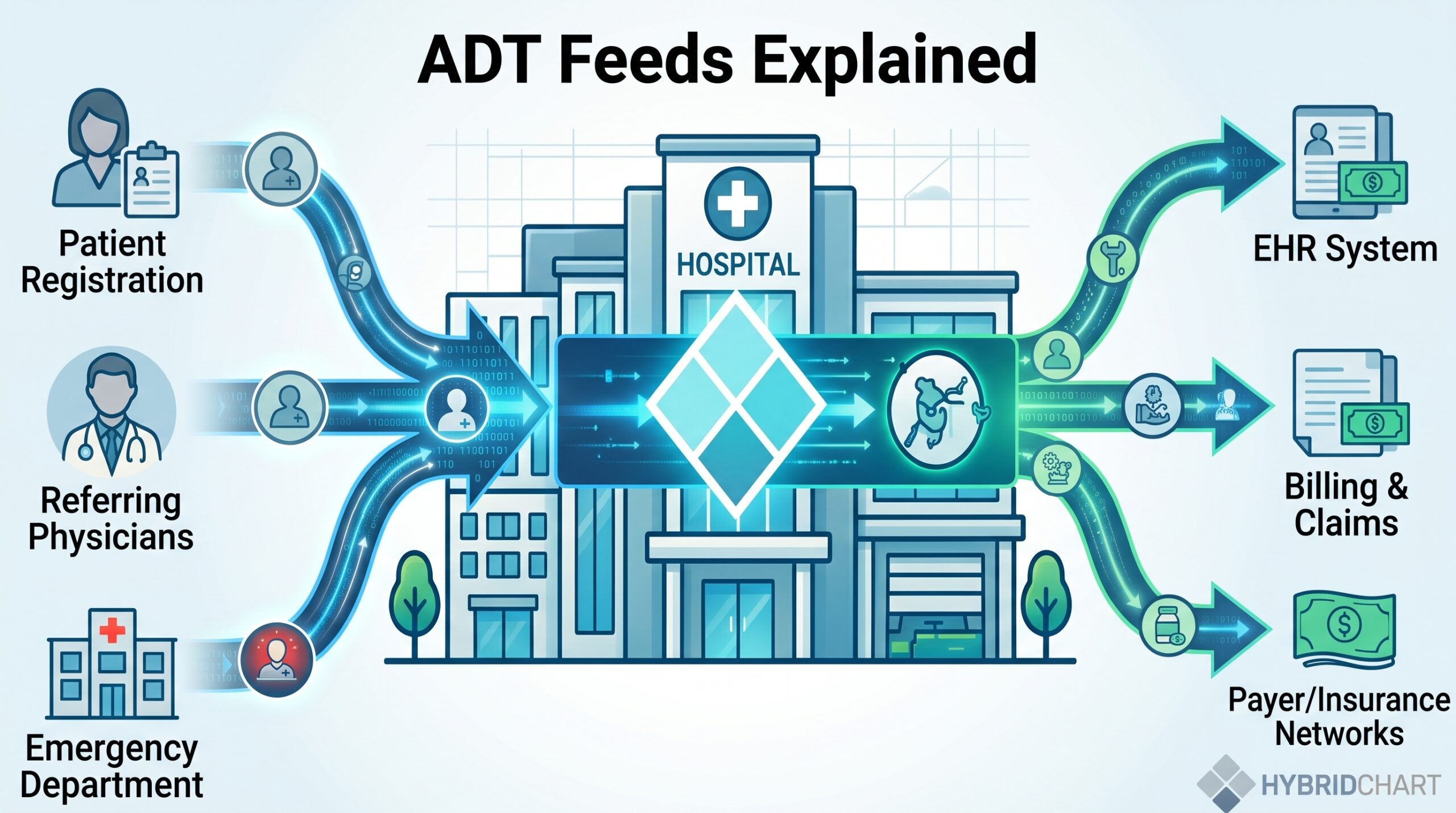
HybridChart connects to the leading EHRs and hospital systems, including athenahealth, NextGen, Epic, Cerner, and eCW, with connections typically activated within 1 to 2 business days. Patient demographics and chart data flow automatically through ADT feeds.
The EHR continues to handle the practice. HybridChart extends that same practice into the hospital, where the EHR’s office-based tools weren’t designed to operate.
Does adopting HybridChart mean replacing our existing EHR?
No. HybridChart connects to your existing EHR and extends it into hospital rounding rather than replacing it.
What revenue risk does a practice take on by relying on EHR-native tools alone for rounding?
Industry-wide, medical practices lose 3 to 5 percent of annual revenue to manual charge capture errors, with a standard 3 to 7 day charge lag, often the result of rounding charges captured on paper and entered into the EHR later.
HybridChart eliminates that lag by capturing the charge at the bedside, the moment care is delivered.
What is the financial risk of using only EHR-native tools for hospital rounding?
Industry data ties 3 to 5 percent of annual revenue loss to manual charge capture errors, often tied to rounding charges entered into an EHR after the fact rather than at the point of care.
How does HybridChart EVOLVE compare to manual rounding sheets and generic EHR apps?
The table below compares the three approaches practices typically choose between for capturing charges during hospital rounds.
| Capability | Manual Rounding Sheets | Generic EHR Mobile Apps | HybridChart EVOLVE |
|---|---|---|---|
| Charge capture location | Recorded on paper, entered later | Built for office visits, not bedside hospital rounding | Captured at the bedside in 3 seconds |
| Charge lag | 3 to 7 day industry-standard lag | Not designed for real-time inpatient capture | Eliminated at the point of capture |
| Multi-facility visibility | No real-time visibility across facilities | Tied to a single practice’s EHR instance | Real-time census across every facility a physician rounds in |
| Revenue impact | 3 to 5 percent annual revenue loss (industry standard) | Revenue leakage from inpatient workflow gaps | Customers report 10 to 15 percent revenue gains post-adoption |
Key Takeaway: Better Together, Not Either-Or
The EHR handles the practice. HybridChart dominates the hospital. HybridChart EVOLVE captures charges in 3 seconds at the bedside and connects directly to the EHR a practice already relies on.
See how HybridChart can extend your existing EHR into the hospital.